
History of This Car
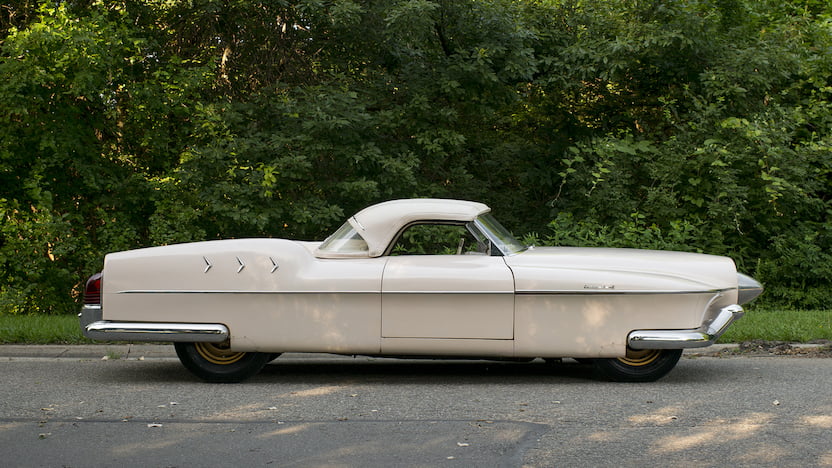
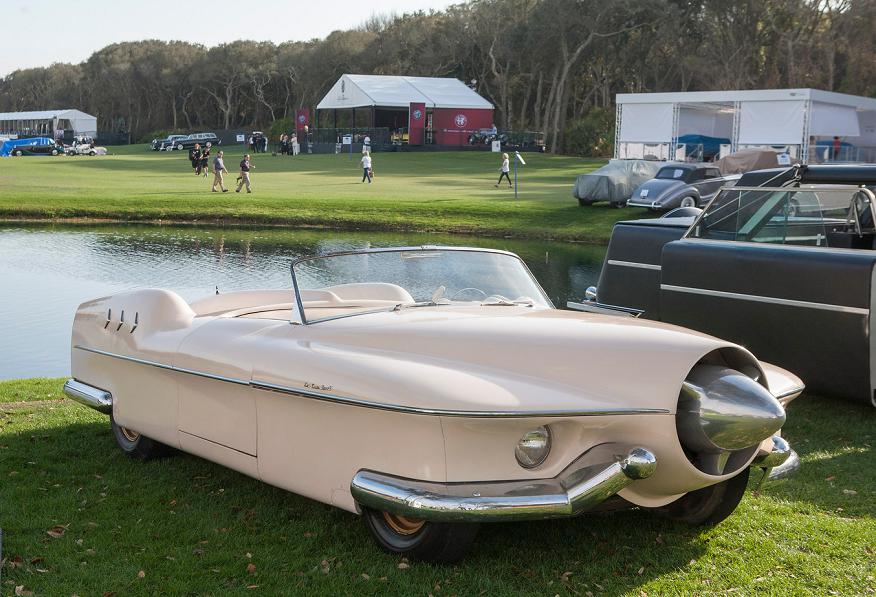
The 1940s and 1950s was a time of many technological advancements, especially in the automotive industry. That era saw wars and the growth of the space age with reports of UFOs and aliens, which in turn naturally stimulated the minds of creative automotive enthusiasts everywhere. The 1952 Manta Ray was inspired by space travel, science fiction, and art from the culture of the time. This concept car was the brainchild of aircraft designers Glenn Hire and Vernon Antoine.
Studebaker Foundation
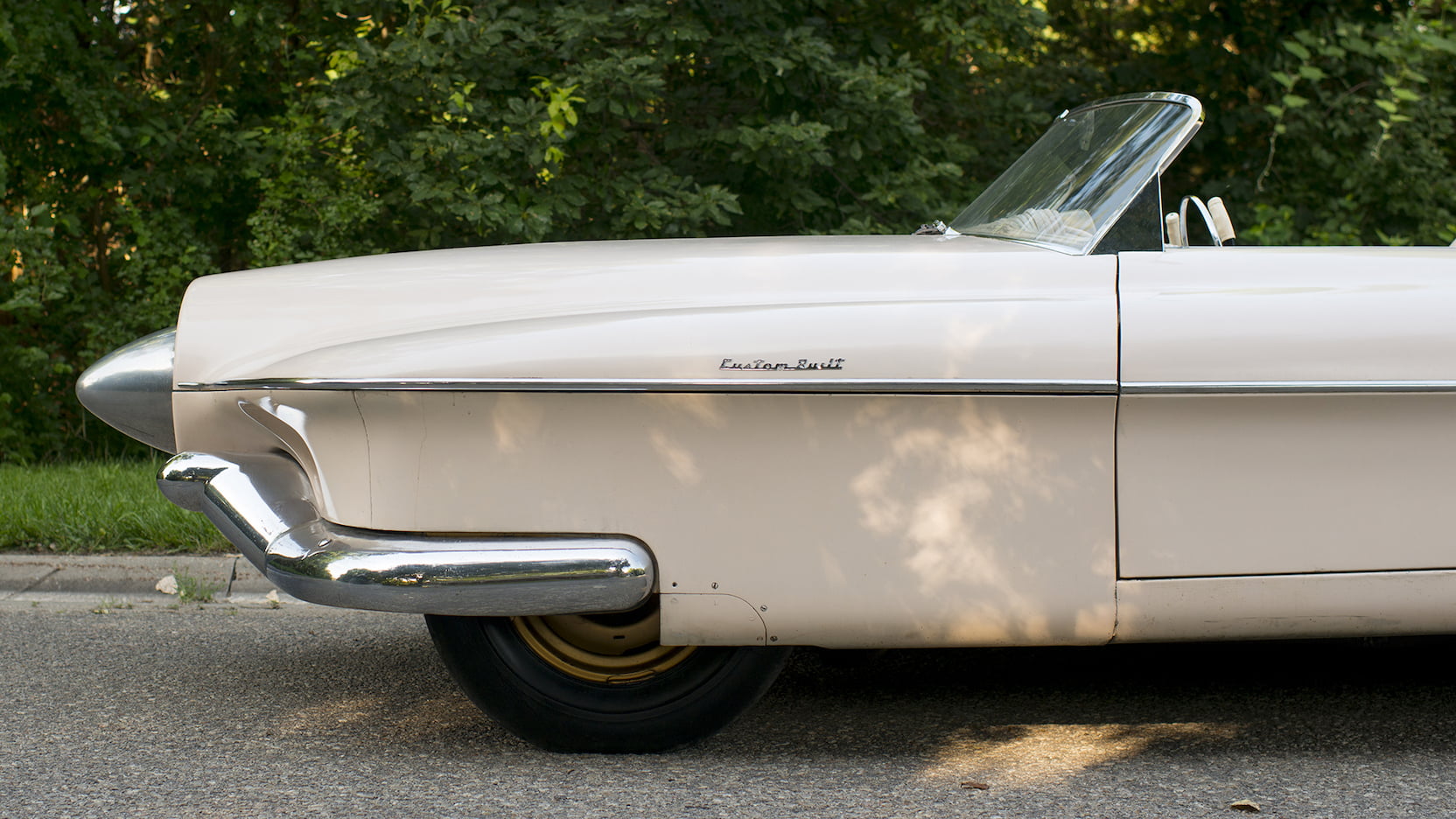
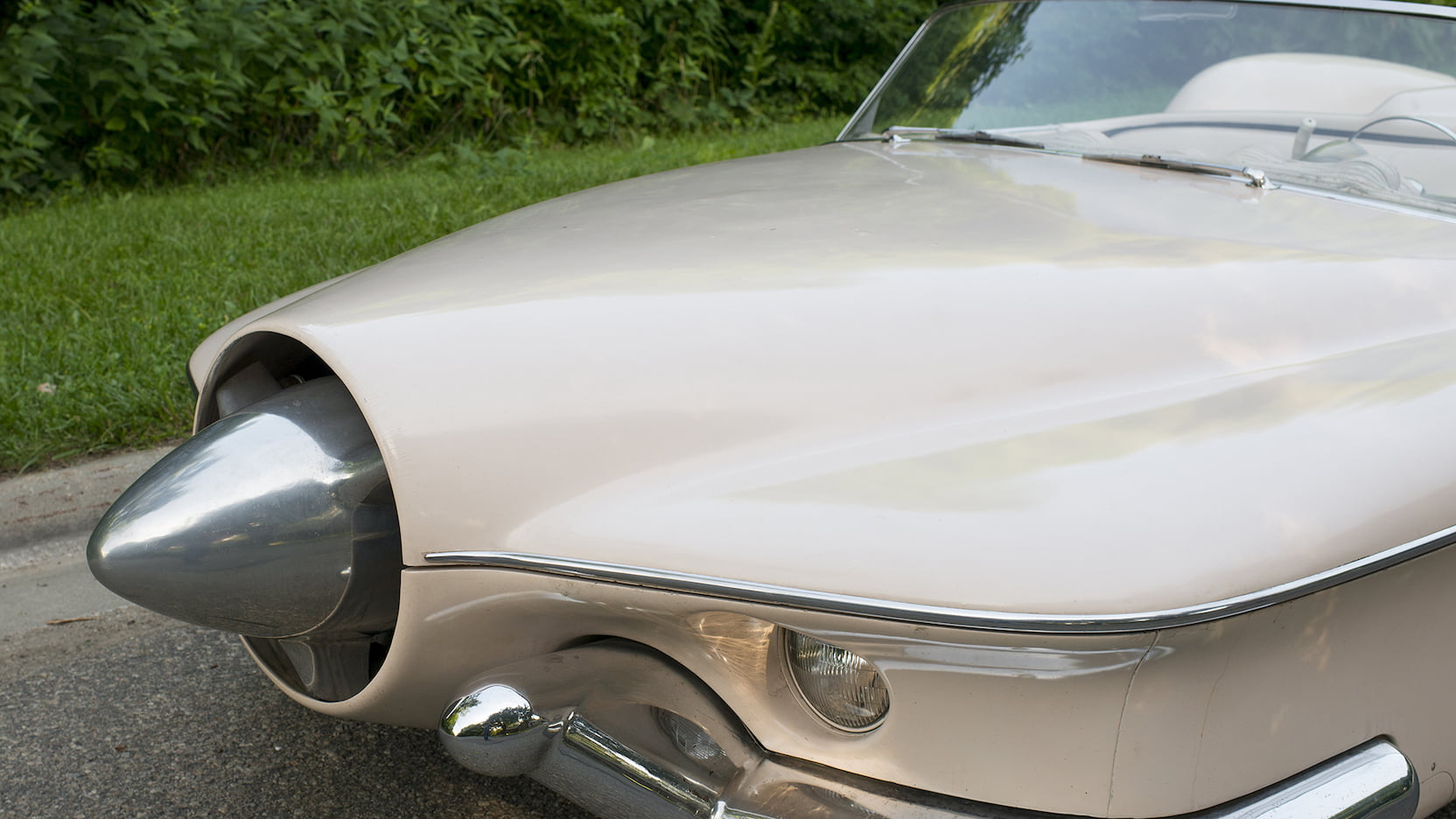
Both Hire and Antoine worked in aircraft design at North American at the time, and they had a vision of a fighter jet-like automotive design, so they purchased a 1951 Studebaker Commander to serve as the foundation for their new space-age concept car they decided to call the Manta Ray. They stripped down the stock body design and added a three-seater roadster body made of fiberglass. Hire and Antoine then began adding designs of the jet age. The first addition was the nosecone which they designed from scratch by first building a wooden cone mold and then casting a quarter-inch shell. Next, they added a triple tail lamp feature borrowed from the 1952 Lincoln design. They kept the Studebaker 232 cu.-in. V-8 engine and the Studebaker chassis, but they chopped some 3 inches from the frame rails.
The Manta Ray Changed Hands
The finished design was showcased in several automotive magazines in 1953 and 1954, like Rod and Custom Magazine, but Hire and Antoine sold the Manta Ray to jet car builder Bob Yeakel. They received permission from him to continue working on the car's design. Their hope was to get the vehicle into circulation as a limited-edition model with two changes: add the body molding to a steel-tube chassis and replace the engine with a Cadillac V-8. The production idea was never cultivated for mass production.
Completed Design
The original car was believed to be completed in late 1952 and debuted before the Chevy Corvette. By 1959, the car found its way into the hands of a used car dealer in Kansas where it was traded for a Volkswagen and a Crosley by collector L.L. "Peanuts" Lacer of Junction City, Kansas. He brought the vehicle to his warehouse full of unusual cars and there it stayed until he died in 1990. Lacer's son D.E. received the vehicle when his mother began liquidating the 120-car collection. D.E. has set to the task of getting the Manta Ray up and running again.
The Resurgence of The Manta Ray
Even decades later, nothing on the road looks remotely close to the Manta Ray Roadster. It would be a crime to keep this vehicle locked up in a warehouse forever, which is why Don Lacer has been hard at work on its restoration.
The Original Fiberglass Body
The fiberglass body and three tail fins haven't been restored. When you view the Manta Ray, you'll be met with the design that Hire and Antoine first imagined.
The Jet-Inspired Nose Cone
This is arguably the defining feature. The mechanics behind this vehicle's restoration have taken careful care of its nosecone so that it remains sleek and intimidating.
A Focus on Originality
The Manta Ray remains largely original, as it wouldn't make sense to change such a unique and eye-catching design. It still maintains its signature look.
Pebble Beach Concours d'Elegance
The Pebble Beach Concours d'Elegance is an annual automotive event in Pebble Beach, California. Unlike competitions that focus on performance and speed, this one judges cars based on their history, elegance, and technical merit. This competition attracts car enthusiasts from around the world as they compete for the coveted "Best of Show" award. Thousands of people show up to see cars that defined eras.
After a long day at the show, the Manta Ray was able to take home Third in Class. This is especially impressive considering it was competing against the best vehicles from around the world. The Manta Ray managed to set itself apart with its innovative design — groundbreaking when it debuted, and there's been nothing like it since.
Where to See the Only Manta Ray
The Manta Ray made its way into many popular car magazines over the years, including Motor Trend, Rod and Custom, and Old Cars Weekly. The only remaining Manta Ray found its way to Junction City, Kansas. To learn more about the only Manta Ray to live in Junction City, visit D.E.L. Motors at 1737 N Washington St or call (785) 238-5368.